Welcome to Rejuvenation Science®!
 Questions? Please call us at
1-888-737-3588 TOLL FREE
Welcome to Rejuvenation Science®!
Questions? Please call us atNew 2014 5th Edition
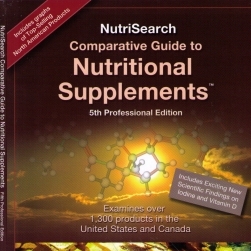
by Lyle MacWilliam
The definitive reference on the science of supplementation.
Find out which top 1% of products earned the NutriSearch five-star quality rating. Hint: Rejuvenation Science Maximum Vitality was one of them.
For those interested in optimizing their health and warding off the aging process, this guide is a must!
Packed with the latest findings on vitamin D, iodine, inflammation, oxidative stress, and degenerative disease, the NutriSearch Comparative Guide to Nutritional Supplementsis the definitive resource for anyone serious about optimal nutrition and anti-aging defense. Inside, you will find:
over 1,300 North American supplements scientifically rated and compared
18 critical Health Support Criteria required to evaluate supplements
30 full-color graphs showing the most popular products
The NutriSearch Comparative Guide to Nutritional Supplements is your roadmap to understanding the remarkable protective powers of vitamins, minerals, and antioxidants.
Discover recent scientific evidence that shows supplements can optimize health and retard the aging process.
Determine which supplement is best for you and your family, using a scientifically-based approach.
Now in it's 5th edition and representing thousands of hours of research, the NutriSearch Comparative Guide to Nutritional Supplements is the way for you to find a quality nutritional supplement that best suits your needs.
Make certain you are providing your body with the very best nutritional supplements that science can offer — your health is too precious to compromise.
The following 18 criteria were used to evaluate multivitamins in the Comparative Guide to Nutritional Supplements by Lyle MacWilliam.
Looks to see if the product contains all the Blended Standard nutrients.
Looks to see how much of each nutrient the product contains compared to the Blended Standard amounts.
Examines the molecules that minerals are bound with to help them cross into the bloodstream. Amino acid chelates and organic acid complexes (such as citrates and gluconates) mimic the natural mineral chelates that form during the digestive process. Chelated minerals also appear not to block other minerals from being absorbed, unlike many of the less expensive mineral salts (carbonates, sulphates, and chlorides).
While d-alpha tocopherol is the most common form of vitamin E, gamma tocopherol and other forms offer additional protection from inflammation, cancer, and other processes that can damage cells. High-dose supplementation with alpha tocopherol alone can reduce the level of gamma tocopherol in body tissues.
Recent scientific research confirms the vital roles that vitamin D and iodine play in maintaining our long-term health. This new criterion examines the many nutrients, including vitamin D and iodine, which help to ward off many of the most common degenerative diseases that shorten our lives.
Examines the nutrients that help to prevent or repair cellular damage caused by oxidation, including vitamin C, vitamin E, vitamin A, beta-carotene, alpha-lipoic acid, lycopene, coenzyme Q10, iodine, and selenium.
Examines the nutrients that assist in bone remodeling, vital to ward off osteoporosis and other diseases that weaken the skeletal framework. These nutrients include vitamin D, vitamin K, vitamin C, vitamin B6, vitamin B12, folic acid, boron, calcium, magnesium, silicon, and zinc.
Examines nutrients that help protect the heart and cardiovascular system including vitamin D, vitamin E, beta-carotene, coenzyme Q10, calcium, iodine, magnesium, l-carnitine or acetyl-l-carnitine, procyanidolic oligomers (PCOs), phenolic compounds, and lycopene.
Examines those nutrients (including vitamin C, cysteine and n-acetyl-cysteine, iodine, selenium, vitamin B2, and vitamin B3) that enhance liver function and optimize levels of glutathione, which help cells fight off toxic challenges.
Examines those nutrients that help the body handle its daily sugar load, keeping systems responsive to insulin and restoring lost insulin sensitivity. These nutrients include vitamin B3, vitamin B6, vitamin B12, vitamin C, vitamin D, vitamin E, biotin, coenzyme Q10, chromium, iodine, magnesium, manganese and zinc.
Good eyesight and prevention of cataracts and macular degeneration require adequate levels of several nutrients, including vitamin C, vitamin E, vitamin A (including beta-carotene), and the carotenoids, lutein and zeaxanthin.
Looks at those nutrients, including vitamin B2, vitamin B6, vitamin B12, folic acid, and trimethylglycine, required for the body to produce methyl donor molecules. Methyl donors help reduce homocysteine levels in the blood, protecting the arteries and nerve fibers.
Examines those nutrients, including choline, lecithin, and inositol, that help remove toxins, including heavy metals like lead. The liver and the brain are two primary targets for the accumulation of fat-soluble toxins.
Examines the nutrients responsible for reducing inflammation at the cellular level, such as omega-3 oils -- including those found in fish oil (eicosapentaenoic and docosahexaenoic acids or EPA and DHA) -- linoleic acid, gamma-tocopherol, alpha-lipoic acid, vitamin C, vitamin D, iodine, flavanoids, procyanidolic oligomers (PCOs), and the phenolic compounds. Chronic inflammation can lead to serious degenerative disease, including heart disease, cancers and arthritis.
Examines those nutrients (l-carnosine, alpha-tocopherol, gamma-tocopherol, vitamin C, and alpha-lipoic acid) that help slow the progress of many degenerative diseases, including Parkinson's disease, Alzheimer's disease, and cancer.
Examines the bioflavonoid family of nutrients, which works throughout the body to attack free radicals and support many bodily functions. These important nutrients include citrus flavonoids, soy isoflavones, quercetin, hesperidin, rutin, bilberry, assorted berry extracts, and PCOs (including resveratrol, grape seed, and pine bark extracts.)
Examines a specific group of phenolic compounds (polyphenolic acids and their derivatives), known to be exceptionally potent defenders against free radicals. Phenols derived from olives, green tea, and curcumin are also known to improve major risk factors for cardiovascular disease, including lowering the impact of inflammation.
Examines those nutrients that can build up in the body, possibly leading to toxic levels with long-term intake. This includes vitamin A and iron. Accidental overdose of iron-containing supplements is, in fact, a leading cause of fatal poisoning in children. Vitamin A is available, safely, as beta-carotene, while adequate iron is easily obtainable for most people from foods.
"The authors that we cite are acknowledged within their respective scientific, medical, and naturopathic fields. Each has published one or more works, and each has provided specific recommendations for daily nutritional intakes."
Phyllis Balch, CNC
Michael Colgan, PhD, CCN
Earl Mindell, RPh, MH
Michael Murray, ND
Richard Passwater, PhD
Ray Strand, MD
Julian Whitaker, MD
Robert Atkins, MD
Terry Grossman, MD and Ray Kuzweil
Jane Higdon, PhD
Philip Lee Miller, MD and Life Extension Foundation
Nicholas Perricone, MD
| Introduction: What's New in the Guide | 3 | |
| Chapter One: Nutrient Depletion of Foods | 7 | |
| Modern Agriculture Impoverishes our Soils | 8 | |
| Nutrient Depletion forces Pesticide Abuse | 10 | |
| Organic Agriculture Improves Nutrient Content | 11 | |
| Conclusions | 12 | |
| Chapter Two: Why We Need to Supplement | 13 | |
| The Case for Supplementation | 14 | |
| The Other Side of the Coin | 16 | |
| Through the Looking Glass | 17 | |
| Chapter Three: The Vitamin D Story | 19 | |
| A Short History | 19 | |
| How Vitamin D is Manufactured | 22 | |
| New Findings on Vitamin D | 23 | |
| How Much is Enough? | 27 | |
| Summary | 28 | |
| Chapter Four: The Iodine Story | 29 | |
| Iodine's Discovery | 30 | |
| The History of Iodine Use | 31 | |
| Iodine's Role in the Thyroid | 32 | |
| Beyone the Thyroid | 33 | |
| Iodine as an Antioxidant | 35 | |
| Iodine Deficiency and Disease | 36 | |
| Iodine and Cancer | 36 | |
| Iodine and Heart Health | 38 | |
| Iodine and Metabolic Health | 39 | |
| Iodine and Breast Health | 40 | |
| How Much is Enough? | 41 | |
| Conclusions | 43 | |
| Chapter Five: Comparing Supplements | 45 | |
| Constructing the Blended Standard | 47 | |
| Limitations of the Study | 51 | |
| Manufacturing Quality | 52 | |
| Qualifying the Products | 52 | |
| The Final Product Rating (Star Rating) | 52 | |
| Chapter Six: Product Rating Criteria | 53 | |
| The NutriSearch Health Support Profile | 53 | |
| 1. Completeness | 53 | |
| 2. Potency | 54 | |
| 3. Mineral Forms | 54 | |
| 4. Vitamin E Forms | 55 | |
| 5. Immune Support | 57 | |
| 6. Antioxidant Support | 57 | |
| 7. Bone Health | 58 | |
| 8. Heart Health | 59 | |
| 9. Liver Health (detoxification) | 60 | |
| 10. Metabolic Health (glucose control) | 61 | |
| 11. Ocular Health | 62 | |
| 12. Methylation Support | 63 | |
| 13. Lipotropic Factors | 64 | |
| 14. Inflammation Control | 64 | |
| 15. Glycation Control | 67 | |
| 16. Bioflavonoid Profile | 68 | |
| 17. Phenolic Compounds Profile | 70 | |
| 18. Potential Toxicities | 70 | |
| Summary | 72 | |
| Chapter Seven: Medals of Achievement | 75 | |
| Assessing Product Quality | 75 | |
| Overview of the Available Certification Programs | 76 | |
| Summary | 78 | |
| Chapter Eight: Health Support Profile Graphs | 81 | |
| Chapter Nine: Product Ratings | 89 | |
| Bibliography | 105 | |
| Tables | ||
| Table 1: Recommendations for Daily Intake of Vitamin D | 27 | |
| Table 2: Table of Recommended Daily Intakes (Blended Standard) | 48-50 | |
| Table 3: Leading Brands by Market Share | 82 | |
Recommended Products |
NEW PRODUCTS | |||
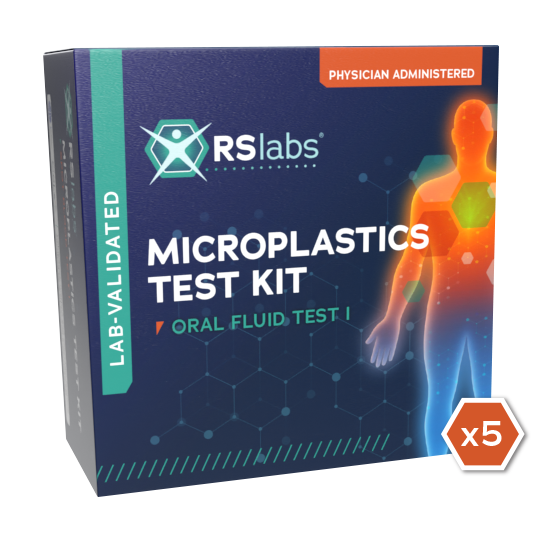
Microplastics Oral Saliva Testing | |||
Recently Viewed |
.jpg)